

Introducing marketing automation: campaigns, triggers and data
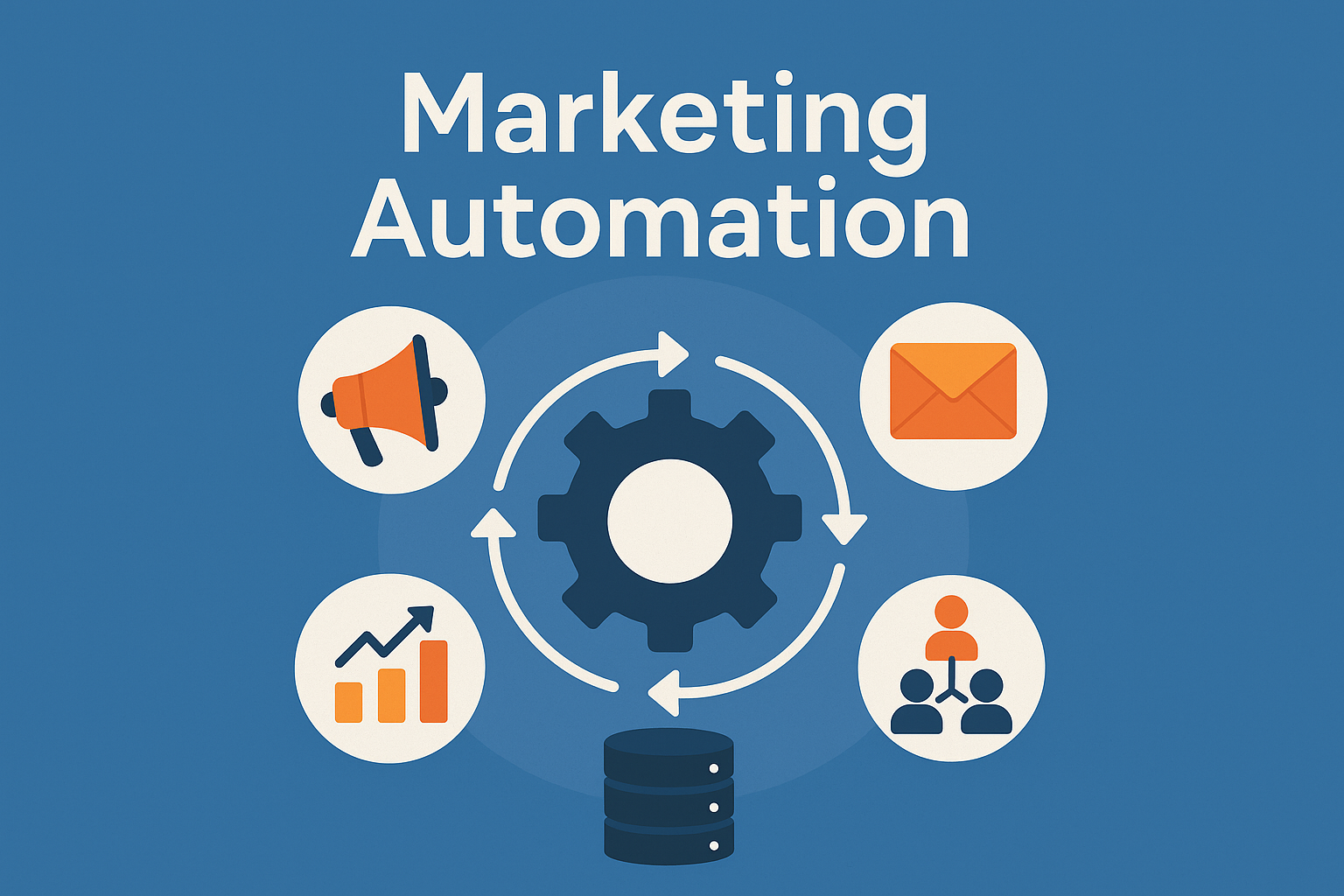
Marketing Automation is now much more than just a buzzword. It means an interplay of processes, data and content that performs recurring tasks automatically – and at the same time In addition, and Faster communicates as manually ever possible. Established correctly, it increases efficiency, scalability and measurability; companies increase the relevance of each contact consistent, up-to-date data ⚙️
For this to succeed, it needs more than “one tool.” Successful introduction means to translate business goals into automatizable steps: Which target groups should receive what information when? Which events trigger what? Which systems provide data – and who is responsible for their quality? If you answer these questions in advance, workflows are not only built, but operational: stable, comprehensible and expandable.
Five building blocks have practically proven themselves:
- Objectives & Use-Cases: From “more qualified leads” to “higher buyback rate” – each target is translated into clear workflows (e.g. welcome distance, nurturing, reactivation).
- Trigger & Rules: Triggers (form, termination of purchase, inactivity) define the start; rules control sequences, pauses and exceptions.
- Data Model: Uniform fields, clean tags, clear name conventions and consent status are mandatory – otherwise automations fire into the void.
- Content: Building blocks for different phases of the customer journey, briefly tested and versioned.
- Measurement & Feedback: KPIs, dashboards and regular reviews ensure that workflows learn and get better.
Building blocks of successful marketing automation
Important: start small, think big. Start with a clearly defined process (e.g. follow-up after request), support effect with key figures, and then gradually expand to adjacent use cases. Parallel to this Governance and Documentation ensure operational reliability: Who changes what? How are errors detected? Which data sources are “single source of truth?” Thus grows from individual automations a coherent architecture that combines campaigns, triggers and data flows cleanly
Understanding marketing automation – from idea to practice
Marketing Automation is not a single tool, but a method by which companies structure, link and automate their marketing processes. It connects data, systems and communication in such a way that marketing campaigns become not only faster, but also more intelligent and relevant. Instead of manually sending messages or tracking leads, an automated logic takes over these tasks – reliably, measurable and in real time
In essence, marketing automation means standardizing and digitizing recurring tasks so that more time remains for strategy, analysis and creative content. Typical applications include:
- Welcome routes after a newsletter subscription, which gradually bring the new contact to the brand and offer.
- Leadqualification where contacts are evaluated on the basis of their behaviour and automatically forwarded to distribution.
- Reactivation of inactive customers , for example, if no interaction has occurred for months.
Such processes run in the background, based on clearly defined rules and triggers. The result is communication that reaches the right person at the right time
But marketing automation is far more than just e‑mail automation. It links CRM systems, analysis tools, forms, shops and advertising platforms to a continuous data stream. When marketing and sales access the same, current information, a seamless customer experience emerges – from the first request to long-term support . At the same time, data transparency improves: campaign results, sales contributions and customer interactions become comprehensible and can be optimized specifically.
In order for this interaction to work, a clear strategy and clean technical implementation are needed. Systems must be able to exchange data structured, secure and synchronized. Only then can automation be scaled and operated stablely – without suffering from quality or data protection.
This makes marketing automation the central control element of modern communication: precise, scalable and designed for growth.
Typical use cases of marketing automation
Strategic planning of marketing automations
In order for marketing automation to develop its full effect, it needs a solid strategic basis. Good automation is not simply a technical workflow, but the image of a well-thought out marketing strategy. It combines corporate goals, customer data and communication logic into a system that reaches people at the right time with the right content. Whoever starts without a plan digitizes chaos – anyone who works with structure creates efficiency, transparency and real added value .
The first step is to clarify the goals: Which tasks should be automated and what contribution do they make to sales or customer loyalty? This question decides on the priority of the workflows and the choice of the appropriate data points. Only if it is clear, which processes should be relieved by automation can it be measured whether they are successful.
Typical fields of application are:
- Lead-Nurturing along the Customer Journey – Interested parties are specifically developed by relevant content until they actively contact or buy.
- Reactivation of inactive contacts – automated reminders, exclusive offers or helpful information bring sleeping contacts back into the system.
- Cross and upselling after the purchase – Customers receive recommendations based on their previous behavior and offer real added value.
- Automatic qualification and forwarding of leads – saves valuable time in sales and ensures that new requests immediately end up with the right contact person.
It is important to start small, but to think big. A simple follow-up sequence after a contact request or a welcome workflow for new newsletter subscribers quickly shows how effective automations can be. Based on these first successes, structures can be expanded – for example multi-stage nurturing campaigns, trigger-based actions or segmented communication paths, which are precisely aligned with the customer journey
Strategic planning also means defining resources and responsibilities: Who cares for content? Who checks data quality? Who measures success? Only when marketing, sales and IT jointly plan the workflow remains stable and comprehensible. This creates a scalable system that grows step by step – not by chance, but through a clear, documented strategy.
Planning steps for successful automation
The mechanics behind successful workflows – Trigger & Events
Triggers are the heart of every marketing automation. They determine wann and under which conditions an action is triggered – that is, the exact moment at which the system becomes active. Without clearly defined triggers, any automation remains ineffective, because only they transform static data into reacting processes that run reliably in the background
A trigger works like a start signal in a perfectly installed machine: As soon as a certain event occurs, a predefined action is started. Typical examples are:
- 📩 A form will be sent: The system automatically creates a new contact, sends a welcome email and marks the source of the request.
- 🛒 A customer cancels the purchase: A reminder e‑mail with the stored shopping cart will be sent, possibly with an additional incentive to return.
- 📊 A contact reaches a certain lead score: The interested party is considered ready for purchase and will be forwarded to the sales team.
- ⏰ A period of time expires: After 30 days of inactivity, a reactivation campaign is started automatically.
These events follow a simple but powerful rule: When X happens, do Y.
This creates complex process chains – for example:
“When a new lead appears in the CRM → check whether consent exists → update data field → start Nurturing route → wait 7 days → send Reminder if no response is made.
This is how automations that work at a time, relevant and consistent – without any manual intervention. The decisive advantage: Processes become scalable, because the system reacts exactly according to the same criteria at each contact.
In order for triggers to function reliably, three basic principles are needed:
- Clear definitions: Each trigger must be clearly described (e.g. “Form A in the area B- rather than “Contact form”).
- Clean data structure: Only current, error-free data ensure that triggers reach correctly.
- Logical order: Workflows must be prioritized and tested to avoid chain reactions or overlaps.
A well-designed trigger system is the nervous system of marketing automation – it connects all parts with each other, detects events, reacts precisely and ensures that communication never happens randomly, but always purposefully.
Data quality and segmentation as a success factor
Data is the backbone of any marketing automation. how precise a workflow works, How relevant content is delivered – and ultimately, how successful without clean, consistent datasets even the best strategies are stalled: triggers do not attack, contacts are double-written or wrong target groups activated. A good automation strategy stands and falls with the quality and structure of the underlying data
The first step is to standardize all data sources. CRM, web forms, newsletter systems and analysis platforms must use the same definitions and attributes. If a field in one system is called “First Name” and in another “First Name”, chaos arises during synchronization. Also consent status (opt-ins), timestamps or source references should be maintained uniformly in all systems. Only then can marketing automation reliably link data and react in real time
An equally central point is the segmentation. It decides which contacts receive what information – and how personal communication feels. Many companies still segment according to purely demographic criteria such as age, gender or industry. However, more effective is a behavioral segmentation: Which pages has a contact visited? Which products viewed? Which content downloaded?
By analysing such interactions, target groups can not only be described more precisely but also dynamically adjusted as the behaviour changes.
An example: An interested person downloads a white paper and then opens several emails to a specific topic. The system recognizes the pattern, automatically shifts the contact into an active segment and starts a suitable follow-up route. This not only automates campaigns but also intelligently controls them
A clear, thought-out data architecture is crucial for sustainable success:
- Uniform data fields in all systems (name, email, opt-in, source).
- Clear tag structures to mark behavior, interests or phases of the customer journey.
- Regular data maintenance and automatic duplicate testing.
- Transparent rules for import, export and deletion – also with regard to data protection.
Only when data quality and segmentation go hand in hand can marketing automation develop its full potential. Then it does not function like a static system, but like a learning network that understands customers before they become active – and responds exactly at the right moment
Reporting & Optimization – what really matters
Marketing automation is only as good as its reporting. Only clean measurement makes visible, which workflows work where contacts jump off and what content drives sales. Instead of looking at individual metrics isolated, you need a system that links key figures over the entire journey – from the first interaction to the buy-back. Thus you recognize trends early and find bottlenecks before they become expensive .
KPI framework on the Journey
Thinking metrics phase-based – that prevents KPI chaos and creates clear responsibilities:
- Top of Funnel (attention): Sessions, CTR from campaigns, lead form completion rate, lead costs.
- Middle of Funnel (assessment): Opening/click rates, time to first reaction, lead score development, nurturing progress.
- bottom of funnel (degree): qualification rate (MQL→SQL), offer rate, win rate, sales cycle duration.
- Retention & LTV: Repurchase rate, Churn rate, Customer Lifetime Value (by segment), Net Revenue retention.
Characteristic structure of the customer journey
Diagnosis instead of lettuce
For each KPI, set a target value and a action path. Example:
- Opening rate drops? → Test subject lines, vary shipping time, check segment quality.
- Click rate low? → Content hierarchy tighter, clearer CTA placement, adjust link density .
- MQL→SQL stockt? → Check scoring, define lead hand over, measure response SLA in sales.
Attribution & cohorts: correctly assign effect
A realistic image is only created with Attribution (e.g. data-driven or position-based) and cohort analyses. This is how you see which touchpoints actually contribute to the conclusion and how certain monthly arrivals develop in the long term. Combine this with UTM standards (campaign, medium, content variant) so that performance remains clearly measurable across channels.
Dashboards that provide answers – do not create questions
A good setup links CRM, email, web and commerce data automatically. Build two levels:
- Executive dashboard: few key figures, trend arrows, budget/turnover ratio, risk signals.
- Operations Dashboard: Funnel drilldowns, segment performance, content heatmaps, error logs.
Complete Alerting with threshold values (e.g. “click rate –30% gü. 7‑day average) – so you become proactively aware of anomalies
A/B tests with discipline
Define a experiment backlog with clear hypothesis, measurement window, significance criterion and termination rules. Test one variable per step (subject, hook, CTA, transmission time) and document results centrally. Wins flow into Standards (e.g. “Subject formula”, “CTA-Tonality”) – so each test becomes the building block of a learning organization.
Quality assurance of the data
Reporting stands and falls with data quality. Set automatic checks: duplicates, empty mandatory fields, invalid emails, missing consent flags. Use validation rules for imports and set Naming conventions for campaigns, segments and fields. A weekly Data Health Review prevents silent measurement errors ]
Example of practice (compact):
- Monday 8 a.m.: KPI snapshot of the last 7 days with deviation analysis.
- Wednesday: A/B review of the current subject tests, decision Next Step.
- Friday: Funnel-drilldown for the weakest segment; action plan for next week.
Checklist for your reporting setup
- KPI set per funnel phase with target values & owners
- Uniform UTM conventions and campaign names
- Linked data sources (CRM, e‑mail, web, shop) incl. field mapping
- Automated alerts for anomalies and SLA violations
- Experiment backlog, documentation, roll-out of the winners
- Weekly Data Health and Month Performance Review
With a reporting that allows clear decisions, optimization becomes routine – not fire brigade. So you learn from every contact, sharpen segments and launch campaigns that perform evidently – efficiently, scalable and comprehensible.
Tumbling and Best Practices
Even the most sophisticated software cannot save bad planning. Many marketing automation projects fail not in technology, but in lack of basics, unclear responsibilities and overhappy implementation. Those who want to automate sustainably must take strategy, processes and data quality as seriously as the workflow itself.
Common errors are:
- To complex workflows without clear target definition – Every automation needs a measurable goal. If it is missing, chains are created without direction that cannot be controlled or evaluated.
- Unclear responsibilities between Marketing & Sales – If both departments evaluate the same leads differently, there will be double communication or lost potential.
- Unstructured or outdated data – duplicates, empty fields and unclear sources lead to false triggers and inconsistent segments.
- No testing before the Go-Live – What sounds logical in the concept often works differently in practice. Without tests, errors become visible only when they reach customers
Best practices for stable automations:
- Modular thinking: Start with manageable workflows that fulfill a clear purpose – such as welcome stretches, follow-ups or reactivation campaigns. Small processes can be better monitored and optimized
- Documentation as mandatory: Draw data flows, trigger conditions and exceptional cases. This facilitates error analysis, handovers in the team and subsequent extensions.
- Establish data governance: Define clear name conventions, field structures and memory rules. A single source of truth prevents conflicting information.
- Testing & Simulation: Test every new automation with internal test contacts. Use simulations to check conditions, loops and demolition logics.
- Regular audits: Check workflows quarterly for functionality, data quality and goal achievement. Old campaigns, unused tags or orphaned triggers should be consistently removed
- Error Culture & Monitoring: Create warning messages for failures and hold a simple protocol, who has changed what when. Thus, causes can be quickly understood and corrected.
A functioning marketing automation is not a rigid system, but a living organism that needs to be maintained and checked regularly. Anyone who understands automation as continuous improvement process remains flexible, reliable and data-proof in the long term – and makes technology a real competitive advantage.
Frequent errors and recommended solutions
From concept to implementation
Anyone who wants to implement marketing automation successfully should understand the process as a long-term transformation – not as a tool introduction.
The best results are obtained when:
— Processes before automation are analyzed and simplified
— Objectives, responsibilities and KPIs are clearly defined
— Pilot campaigns to be tested before everything is automated
Companies that go this way benefit not only from efficiency, but also from higher data quality and better customer experience.
Flexible platforms such as n8n or Pabbly Connect are available for technical implementation – such as connecting CRM, forms, e‑mail systems and analytics. This enables automation to be precisely adapted to the business processes without encountering rigid tool limits.
Marketing Automation only unfolds its potential when strategy, data and implementation are neatly interlocked. With the right structure, processes not only become faster, but more intelligent.
If you want to introduce marketing automation in your company, I will develop customized workflows with you – whether with n8n, Pabbly Connect or your existing system landscape.
From concept to implementation
Marketing automation is not a short-term project, but a strategic development of the entire marketing organization. It changes how teams work, how data are used and how decisions are made. Therefore, the entry should not be understood as a mere tool introduction, but rather as transformation process, which sustainably shapes processes, roles and communication paths.
Before automating a workflow, processes have to be critically checked: Which tasks run twice? What releases delay processes? Which steps can be simplified before they are digitized? A bad routine also remains automated inefficient – therefore: First optimize, then automate
Successful projects follow a clear process:
- Analysis and target definition – Processes are documented, bottlenecks made visible and automation potential prioritized.
- Establishing responsibilities and KPIs – Who is responsible for data quality, who measures success, who maintains content? Clear roles avoid friction between marketing, sales and IT.
- Pilot Phase – Small, clearly defined automations serve as a test field. Here you will learn how triggers grab, data flows and workflows interact with each other
- Scaling and integration – After successful tests, systems are connected: CRM, forms, email tools, web analytics, ads tracking and reporting dashboards. This creates a uniform architecture that can be used throughout the company.
- Training and documentation – Employees must understand what happens in the background. Only when knowledge is shared, automation remains sustainable.
Companies that follow this path benefit from measurable efficiency, higher data quality and better customer experience. They gain not only time, but transparency over their entire marketing and sales processes – a basis on which data-driven and future-proof work can be carried out
Marketing Automation only unfolds its potential when Strategy, data and implementation seamlessly interlock . With a clear structure, workflows become not only faster, but also smarter – they learn from behavior, automatically prioritize tasks and create space for creative, value-creating marketing.
➡️ If you want to build marketing automation in your company or optimize existing processesTogether with you, I develop tailor-made workflows that fit your strategy, systems and target group – flexible, comprehensible and sustainable.
FAQ: Frequently asked questions about marketing automation
- What do you mean by marketing automation?Marketing Automation refers to the use of digital systems for automatic control of marketing processes.
The process such as sending e‑mails, lead maintenance or campaign control runs in the background,
Data sources such as CRM, forms or web analysis are linked,
Customers receive relevant content at the right time. - What are the benefits of marketing automation?The main advantages are:
Time saving through automated routine tasks
More relevance through personalized communication
的 Better traceability through central data storage
Scalable processes with consistent quality
Companies increase efficiency and create more freedom for strategy and creativity. - For whom is marketing automation worth?Marketing Automation is especially worthwhile for:
Companies with recurring marketing processes
Sales organizations with many leads or customer contacts
E‑commerce teams with regular communication needs
Marketing departments that want to use data from different sources
In short, wherever processes run regularly and data are present. - What processes can be automated?Typical applications are:
Welcome and follow-up emails
Lead Nurturing and Reactivation Campaigns
E‑commerce e‑commerce e‑shopping workflows
— Appointment reminders or follow-up actions in sales
Almost every recurring marketing process can be converted into automated workflows. - What requirements must be met?For successful automations it takes:
Clear goals and documented processes
Clean, current data base
systems that can reliably exchange data (e.g. via API or Webhook)
Defined responsibilities for data maintenance and reporting
It is only when these foundations are established that the development of automated processes is worthwhile. - How is the success of marketing automation measured?Key indicators are:
Conversion rate – how many contacts become customers
Engagement rate – openings, clicks, reactions
的 Lead quality and customer lifetime value
Turnover contribution of automated campaigns
Dashboards or tools like Looker Studio visualize results in real time. - What mistakes should be avoided?Common stumbling blocks are:
To complex workflows without clear goals
Unkept or duplicated records
— Lack of testing before the go-live
A lack of coordination between marketing and sales
Better: start small, document processes and optimize them regularly. - How does Marketing Automation remain GDPR compliant?For legally secure automations:
Double opt-in is mandatory when contacting
i的 Transparent data protection information in forms
Clear erasure and retention periods for data
Use of data protection compliant systems with EU server location
Automation thus remains efficient – and at the same time legally compliant.
Schreibe einen Kommentar zu "Introducing marketing automation: campaigns, triggers and data"